
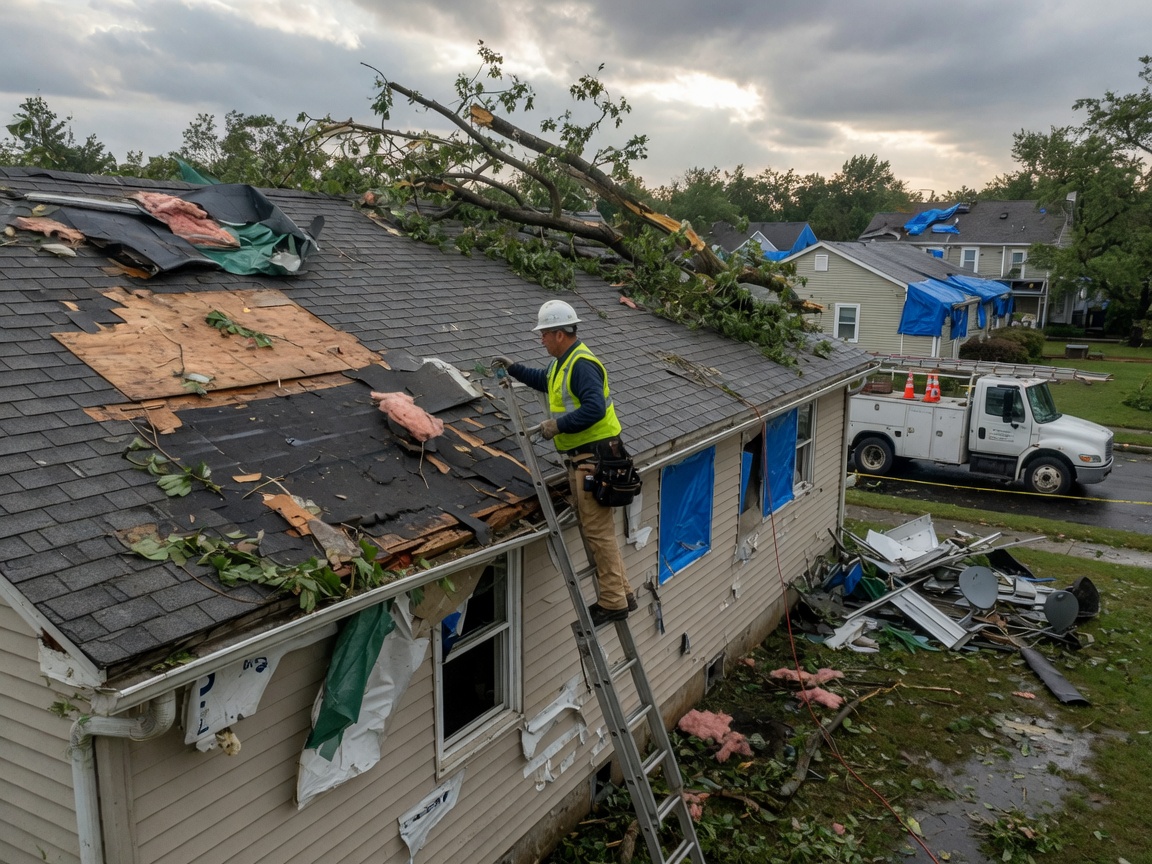
Summer thunderstorm lines and winter nor'easters both reach South Jersey, and the aftermath is fairly consistent: shingles lifted or torn along exposed slopes, ridge caps gone, flashing pulled away at chimneys, and limb strikes where mature trees sit over the roof. McManus Roofing LLC handles storm and wind damage repair across Camden, Burlington, Gloucester and Atlantic Counties from our shop at 22 Maiese Ave in Waterford Works.
The first move is tarping, not repairing. When water is actively getting in, the priority is stopping it so the interior stops taking damage — ceilings, insulation, wiring and contents cost far more to put right than the roof does. Permanent repair comes after, once the weather allows, because work done on a wet roof in poor conditions does not hold.
Then documentation. If this is going to your insurer, what you have in hand matters. We photograph the damage with dates, write an itemized scope of work, and can meet your adjuster on site to walk the roof. You file the claim with your carrier — we are not public adjusters and do not negotiate on your behalf — but we supply the evidence they ask for. Documenting before repairs begin is important, because damage that has already been fixed is harder to get included in a claim.
What actually fails. Wind gets under the leading edge of a shingle and works it loose; once one tab lifts, the ones above it are exposed. Ridge caps and ridge vents go early because they sit at the highest-pressure point on the roof. Step flashing at chimneys and sidewalls pulls away as the metal cycles through temperature swings. And on older roofs installed before ice-and-water shield was common practice, a small tear at the eave lets water straight onto bare decking.
Timing matters more in autumn. A wind tear in October that goes unrepaired takes the full winter of freeze-thaw, and what would have been a shingle repair becomes deck replacement by spring. Storm damage found in the fall is worth acting on rather than leaving until the weather improves.
Technician insight
The mistake that costs people most is waiting out the winter. A wind tear found in October looks minor, and the instinct is to deal with it when the weather improves. But that exposed section then takes four months of freeze-thaw with water getting straight onto the decking, and what would have been a few hundred dollars of shingle and flashing work in autumn turns into deck replacement in April. If a storm has lifted something, get it closed before the first hard freeze.
Wind-lifted shingles found before winter
A late-October nor'easter lifted multiple tabs along a ridge and pulled step flashing away at the chimney, with water staining showing in the attic. The damaged shingles were replaced and the flashing reseated, closing the roof before the first hard freeze. Left until spring, the exposed decking would very likely have needed replacing.
Storm & Wind Damage Repair Services We Offer
✓Emergency Tarping After Wind Events
Heavy-duty tarps secured over open sections to stop water entry until the permanent repair can be done properly.
✓Insurance Damage Documentation
Dated photographs and an itemized written scope prepared for your insurance carrier, with adjuster meetings on site where needed.
✓Shingle Replacement and Tab Repair
Matching and replacing lifted or torn shingles to restore the seal before freeze-thaw widens the gaps.
✓Flashing and Valley Restoration
Re-seating or replacing step flashing and valley metal at chimneys and dormers, where wind-driven rain most often gets in.
✓Ridge Vent and Soffit Repair
Reattaching or replacing ridge vents and soffit panels, which sit at the highest-pressure point on the roof and fail first.
✓Gutter and Downspout Reattachment
Re-securing and realigning gutters pulled loose by wind or ice so water still drains clear of the foundation.
Storm & Wind Damage Repair Cost in Waterford Works, NJ
| Service | Typical Range | What Affects It |
|---|---|---|
| Storm damage assessment and written scope | Free | Free and unconditional — no obligation to have any work done, and no charge if you go elsewhere. |
| Emergency tarping | $300–$650 | Varies with roof pitch, access and the number of compromised sections. |
| Shingle and flashing repair | $450–$1,200 | Combined scope. Depends on the extent of damage and whether step flashing at chimneys must be replaced. |
| Ridge vent and soffit restoration | $350–$800 | Higher when multiple sides of the home are affected. |
Ranges are typical for Waterford Works, NJ and confirmed with an exact written quote before any work starts.
How it works
- 1
Storm Assessment
We walk the roof and check interior ceilings and the attic for water that has travelled from the entry point — often several feet from where the stain shows.
- 2
Temporary Protection
Tarps over the compromised sections to stop water getting in while the permanent repair is scheduled and materials come in.
- 3
Documentation and Scope
Dated photographs and an itemized written scope covering both visible wind damage and any hidden moisture found — formatted so it can go straight to your insurer.
- 4
Permanent Repair
Shingles, flashing and vents replaced or re-secured, with anything beyond the agreed scope shown to you and approved before it is done.
- 5
Final Walk-Through
A walk-through covering what was found and what was done, plus a check that gutters and downspouts still carry water clear of the foundation.
Pricing
Pricing depends on roof size, extent of hidden damage, and whether temporary tarping is required before permanent work begins.