
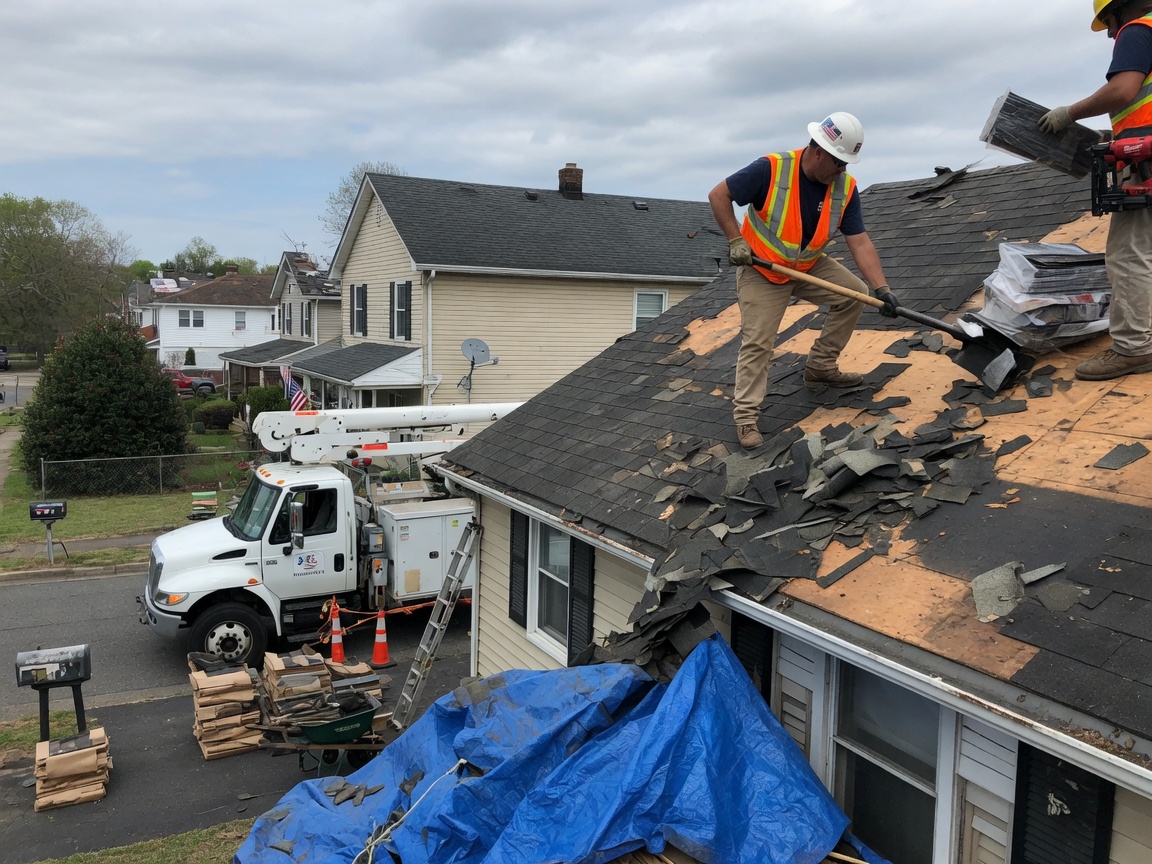
A great many homes across Waterford Works and the wider South Jersey area were built between the 1950s and 1970s, and a large share are now on their second shingle layer. Those roofs face repeated cycles of hot humid summers that soften asphalt and strip granules, followed by winter freezes that cause contraction and work fasteners loose. Replacement starts with removing every existing layer down to the deck, checking for rot around chimneys and in valleys, then installing underlayment with ice-and-water protection at the eaves and valleys.
We tear off. We do not roof over. New Jersey code permits roofing over one existing layer in many situations, and some contractors offer it as a saving. We do not, for four reasons: it conceals rotted decking you are then paying to ignore, it adds weight the framing was not designed for, it voids most manufacturer warranties, and it makes the next replacement more expensive than the money you just saved. It is also the only way anyone can honestly tell you what condition your deck is in — you cannot assess sheathing you have just covered up.
Metal roofing. Standing-seam metal has gained ground here because it sheds snow well, reflects summer heat rather than absorbing it, and lasts 40 to 50 years. The fasteners are concealed beneath the seams, which matters — exposed-fastener metal depends on hundreds of rubber washers that degrade in UV and need periodic re-torquing. We verify deck integrity before installing, because older plywood can delaminate under new fasteners, and we size ridge venting to the attic volume so humid summer air is not trapped against the sheathing.
Flat and low-slope sections. Additions, garages and porches with shallow pitch need different treatment. Modified bitumen or TPO membrane must be installed with proper slope to the drains, because standing water accelerates seam failure. Ponding is nearly always a drainage problem rather than a material problem, so we correct the fall before the new membrane goes down rather than resetting the clock on the same failure. Asphalt shingles on a pitch below roughly 4:12 will leak at the laps regardless of workmanship, and correcting that is a job we are called to do fairly often.
Wind ratings and impact resistance. Roofing work in New Jersey is governed by the state Uniform Construction Code, which adopts the International Residential Code with state amendments, and local permitting is handled by your municipal construction office. Requirements change over time and vary by jurisdiction, so we confirm the current permit and inspection requirements for your township as part of the job rather than quoting from memory. Separately from code, Class 4 impact-rated shingles and enhanced fastening patterns are both worth considering on exposed sites — they cost modestly more and hold up better in wind and hail, and some insurers offer a premium discount for impact-rated roofing. Worth asking your carrier.
Technician insight
The thing that catches most people out on a roof replacement around here is hidden rot under the old layers on 1960s homes. Winter contraction opens seams that summer humidity then drives water into, and the deck can be soft for years without a single drop showing on a ceiling. That is the whole argument for tearing off rather than roofing over — and it is why our quotes carry a board replacement allowance on older homes instead of landing you with a change order once the roof is open.
Winter leak on a 1968 ranch
A Waterford Works homeowner noticed ceiling stains after a January freeze. We found ice dam damage and rotted decking around the chimney. The roof was replaced with architectural shingles, extended ice-and-water shield at the eaves, and balanced ridge and soffit venting to keep the deck cold and stop the dams re-forming. No further leaks through the following winter.
Roof Replacement Services We Offer
✓Asphalt Shingle Roof Replacement
Full tear-off and installation of architectural shingles, the standard choice for most South Jersey homes.
✓Metal Roof Replacement
Standing-seam or screw-down metal panels, with a 40 to 50 year service life and strong performance in heat and snow.
✓Flat Roof Replacement
Modified bitumen or TPO membrane on garages, porches and additions, with drainage corrected before installation.
✓Tile Roof Replacement
Concrete or clay tile removal and reinstallation with updated underlayment.
✓Slate Roof Replacement
Natural slate work on older and historic homes, using copper flashing to match original detailing.
Roof Replacement Cost in Waterford Works, NJ
| Service | Typical Range | What Affects It |
|---|---|---|
| Asphalt shingle replacement | $6,500–$14,000 | Depends on square footage, pitch, number of existing layers, and chimney, skylight and valley count. |
| Metal panel replacement | $9,000–$18,000 | Higher for standing seam; lower for screw-down. 40–50 year service life. |
| Flat roof membrane | $4,000–$9,500 | Varies with drainage correction and any insulation added. |
| Ventilation upgrade during replacement | $800–$2,200 | Ridge and intake vents sized to attic volume. Intake matters as much as exhaust. |
Ranges are typical for Waterford Works, NJ and confirmed with an exact written quote before any work starts.
How it works
- 1
On-Site Inspection
We examine deck condition, flashing, ventilation and any water intrusion points around chimneys and skylights — and count how many existing shingle layers are on the roof, since that drives tear-off labour and disposal weight.
- 2
Written Itemized Quote
You get the scope in writing: shingle manufacturer and line, underlayment type, where ice-and-water shield goes, flashing scope, ventilation plan, layer count coming off, cleanup, and an allowance for deck board replacement where the age of the home makes it likely.
- 3
Tear-Off and Deck Inspection
All existing layers come off to bare sheathing and rotted boards are replaced. You see the open deck before anything covers it back up, and any work beyond the allowance is agreed at that point rather than appearing on the invoice.
- 4
New Installation
Ice-and-water shield at eaves and valleys, synthetic underlayment across the field, new flashing at every penetration, then the finished roofing, with ridge and soffit ventilation sized to the home's attic volume.
- 5
Final Walk-Through
Full debris removal, a magnet sweep of the property for nails, a walk-through covering what was done and what we found, and manufacturer warranty registration.
Pricing
Free on-site inspection and a written, itemized quote. Price varies by roof size, pitch, existing layer count and material chosen — we do not quote roofs from photographs.